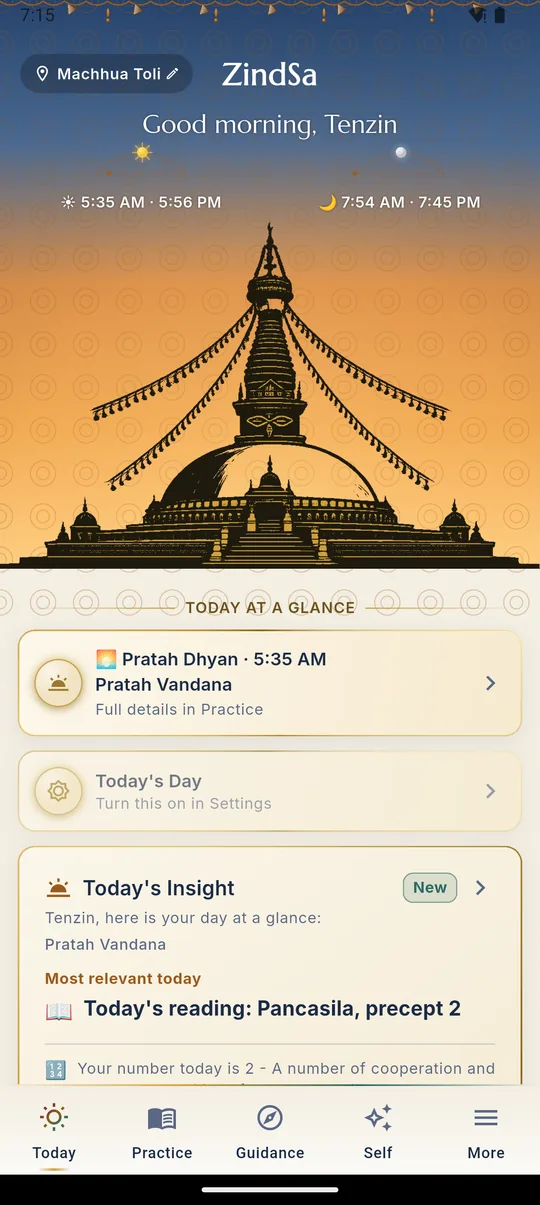
Three observances, all computed rather than stored, all of them Ambedkarite, and the thinnest calendar of the six, which is the first thing this page says rather than the last.
Buddhist profiles get three observances: Dhammachakra Pravartan Din, the opening of Pavarana and Kathina Kaal, and Kartik Purnima Vandana. There is also an Uposatha reminder, and sunrise and sunset practice entries.
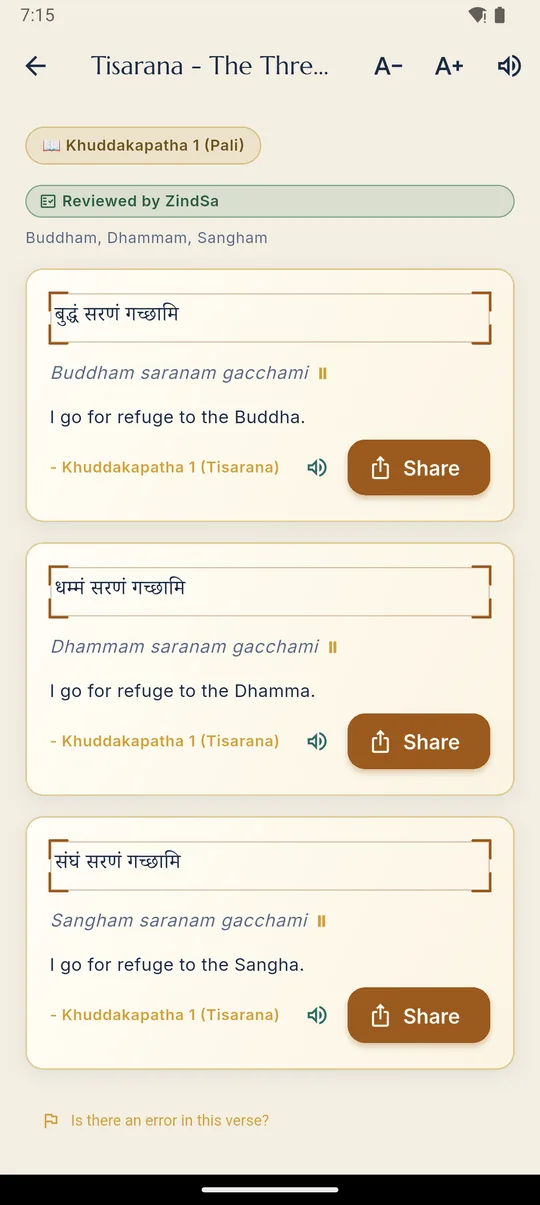
The corpus is three texts in Pali: the Tisarana, the five Panca Sila precepts, and Dhammapada verses 1, 5 and 183, against a Dhammapada of 423 verses.
This is the thinnest calendar of the six. The Hindu one carries 33. We would rather publish that asymmetry than let you discover it.
All three observances are computed from a lunar month and a tithi. None is a stored date. All three are specifically Ambedkarite observances, and Dhammachakra Pravartan Din marks the dhamma-deeksha taken at Deekshabhoomi in Nagpur, which the app says in its own explanation of the day.
The Uposatha reminder is a notification rather than a calendar entry. It fires on the lunar days the app can already compute, tithis 8, 15, 23 and 30, and it does not tell you which Uposatha, because the app does not know which tradition's reckoning you keep.
Vesak, Asalha Puja and Magha Puja are absent, and the reason is written into the code rather than left to be discovered: those are exactly the observances that fall on different days in different traditions.
The tradition tag you pick at onboarding, Theravada, Mahayana or Vajrayana, is at present a descriptive label that no calculation reads. Wiring it into a calculation before a tradition-varying event exists would be forcing a false calculation, so the tag waits, and the observances that need it are not shipped.
There is no Mahayana or Vajrayana material in the corpus.
ZindSa checks its own content against published editions, and the source, locator and date for each check are recorded in the app itself. No external scholar and no religious body has endorsed it, and this page does not claim otherwise. What is checked here is mechanism, not authority.
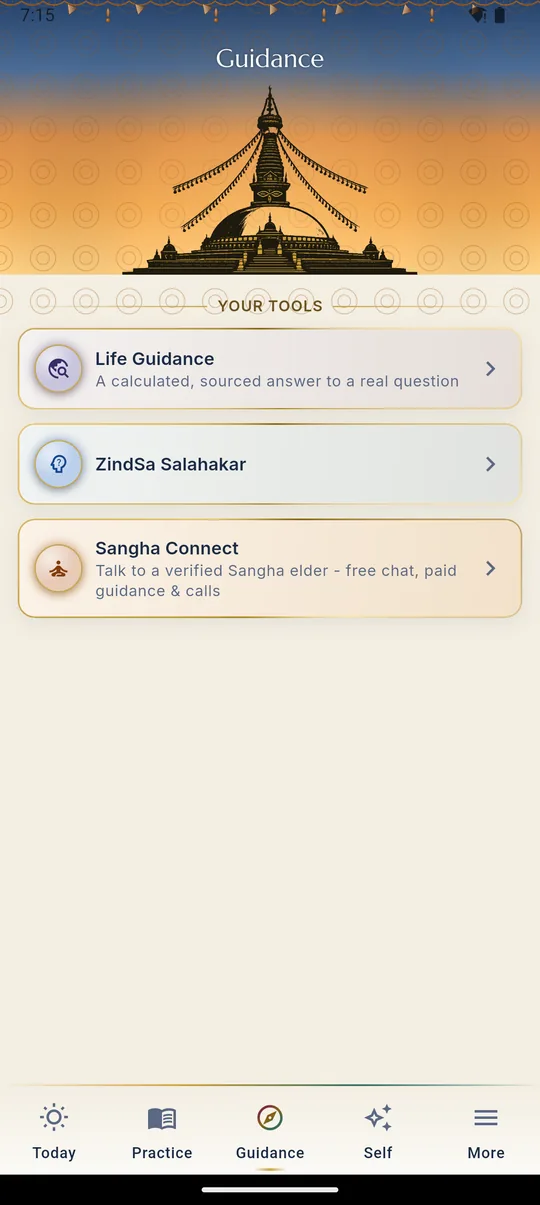
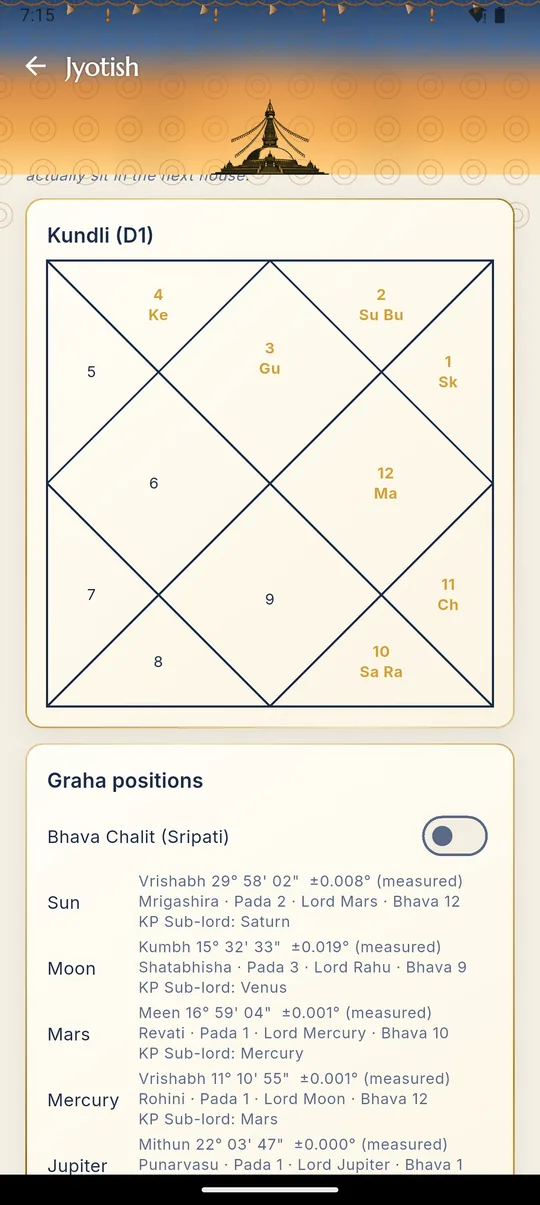
Muhurat and vastu are Hindu-jyotish systems. They are shown to whoever opens them, and the app says on its own screens that it carries no equivalent from any other tradition. It does not relabel them as yours. The plain-language meanings printed beside the verses, in every dharma, have authorship the licence register has not yet established, and that row is open rather than quietly closed.
Related: which Buddhist observances ZindSa shows, and what ZindSa does not do for your dharma. All questions.