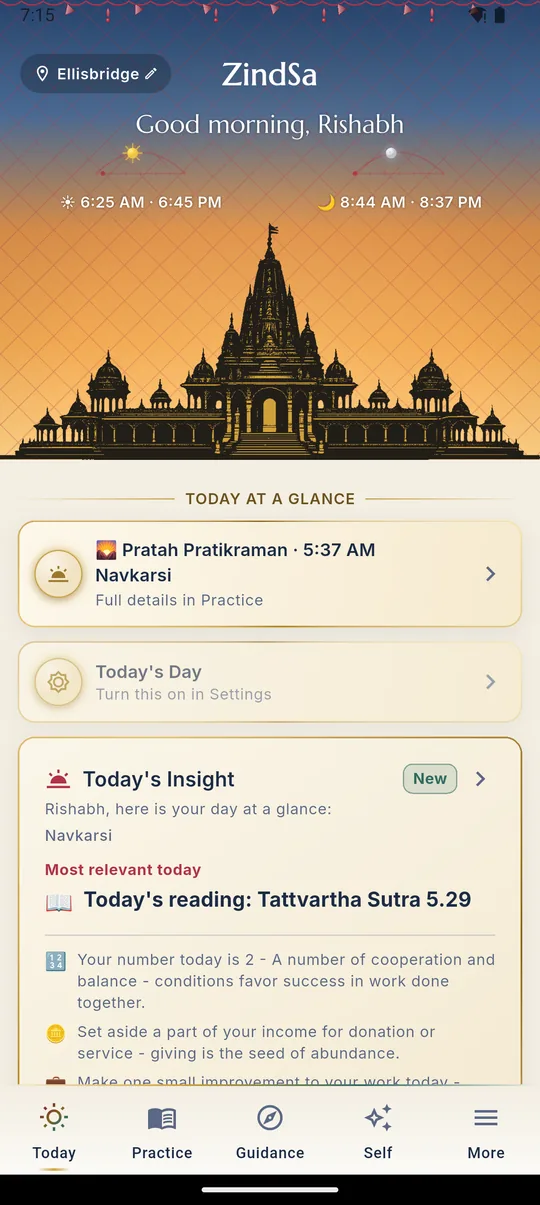
A Digambar or Shvetambar calendar, both computed from tithis rather than looked up, with the other tradition's date shown beside yours instead of one convention chosen silently.
Jain profiles get a Digambar or Shvetambar calendar, Pratikraman and Navkarsi timings, and a parva reminder. You choose the sect immediately after choosing your dharma, and can change it in Settings.
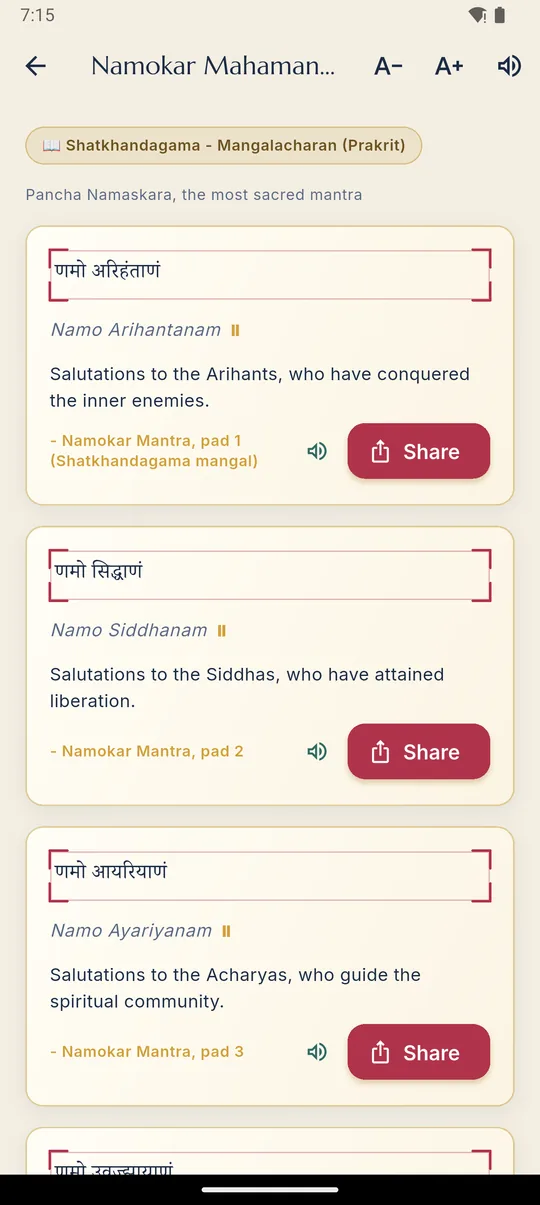
What that choice changes today is your calendar and nothing else, which is the app's own wording on the screen where it asks. A Digambar profile gets Das Lakshan. A Shvetambar profile gets Paryushan and Samvatsari. The texts, translations and guidance are the same for both. Seven Jain parvas ship in all, and any one profile sees five.
Both are computed from tithis rather than looked up. Paryushan opens on Bhadrapada Krishna Dwadashi, Samvatsari falls on Bhadrapada Shukla Chaturthi, and Das Lakshan runs from Shukla Panchami to Chaturdashi. They are two separate rules under one engine, and the code records that they were cross-verified against each other, and that the Shvetambar eight-day reckoning and the Digambar ten-day one are two traditions' own parvas rather than one convention silently chosen.
Where a parva has a counterpart in the other tradition, the app shows that date beside yours instead of pretending there is only one.
Mahavir Janma Kalyanak carries no sect scoping, deliberately: both traditions observe the birth kalyanak on the same tithi, so scoping it to one would be a silent editorial choice. Mahavir Nirvan Kalyanak and Kartik Ashtahnika are unscoped for the same reason. The opening day of Kartik Ashtahnika is a point where sources genuinely differ, and ZindSa follows the shastriya rule and says so on the event itself.
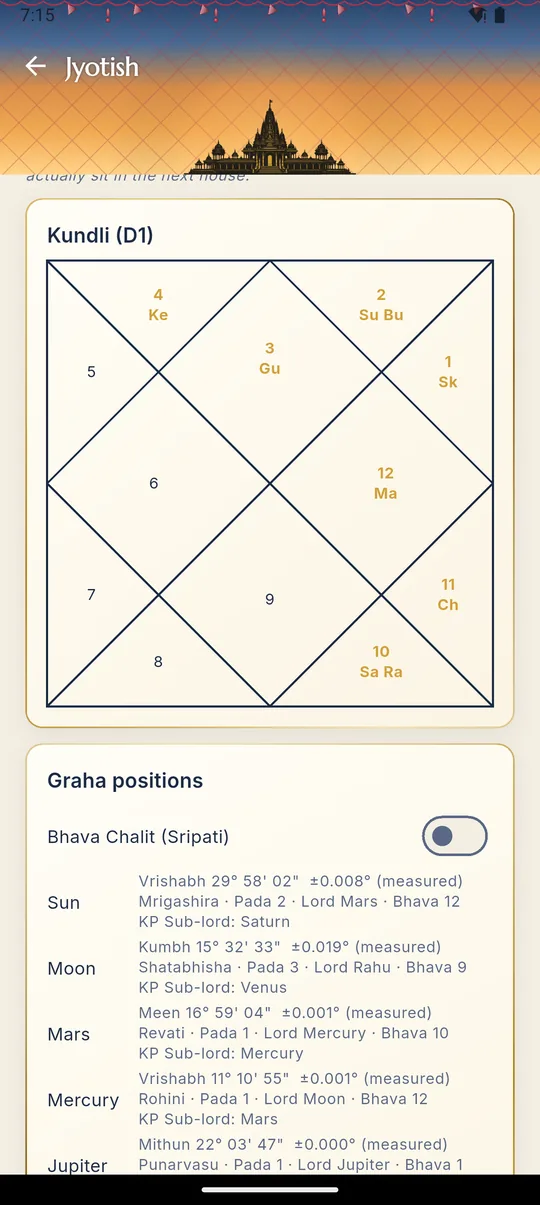
No nimitta and no Jyotish calculation ships for Jain profiles. Jain reflection covers four of the seven life domains rather than all seven.
ZindSa checks its own content against published editions, and the source, locator and date for each check are recorded in the app itself. No external scholar and no religious body has endorsed it, and this page does not claim otherwise. What is checked here is mechanism, not authority.
Muhurat and vastu are Hindu-jyotish systems. They are shown to whoever opens them, and the app says on its own screens that it carries no equivalent from any other tradition. It does not relabel them as yours. The plain-language meanings printed beside the verses, in every dharma, have authorship the licence register has not yet established, and that row is open rather than quietly closed.
Related: whether ZindSa follows Digambar or Shvetambar, and what ZindSa does not do for your dharma. All questions.