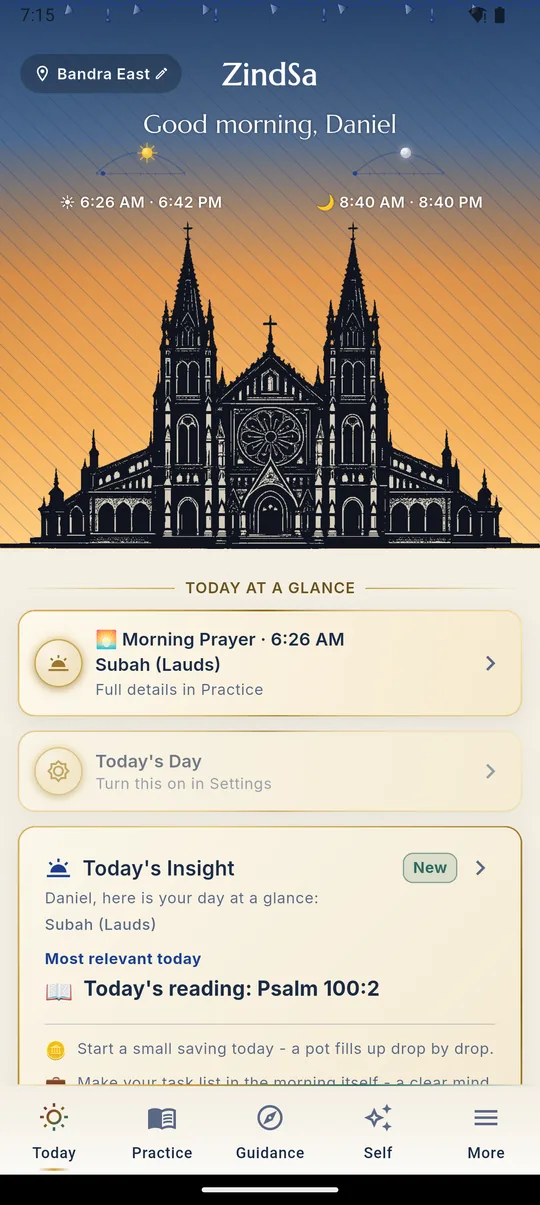
Easter worked out in both the Western and the Orthodox reckoning, from the year alone, with no stored table anywhere in the app.
Christian profiles get Easter computed in both reckonings, feasts scoped to their denomination, and a Sunday reminder. The dharmik calendar carries 10 computed Christian events. You choose Catholic, Protestant or Orthodox after your dharma, and can change it later in Settings.
Easter is computed on your phone from the year alone. Western Easter uses the Anonymous Gregorian computus, usually published as Meeus-Butcher. Orthodox Easter uses the Julian-calendar variant from Meeus's Astronomical Algorithms, converted afterwards into a proleptic Gregorian date with a thirteen-day offset. There is no stored table of Easter dates anywhere in the app.
Good Friday is derived rather than stored: it is Easter minus two days, taken from whichever Easter your denomination uses, so it cannot drift out of step with it. Advent is the fourth Sunday before Christmas by the Roman liturgical rule, also computed.
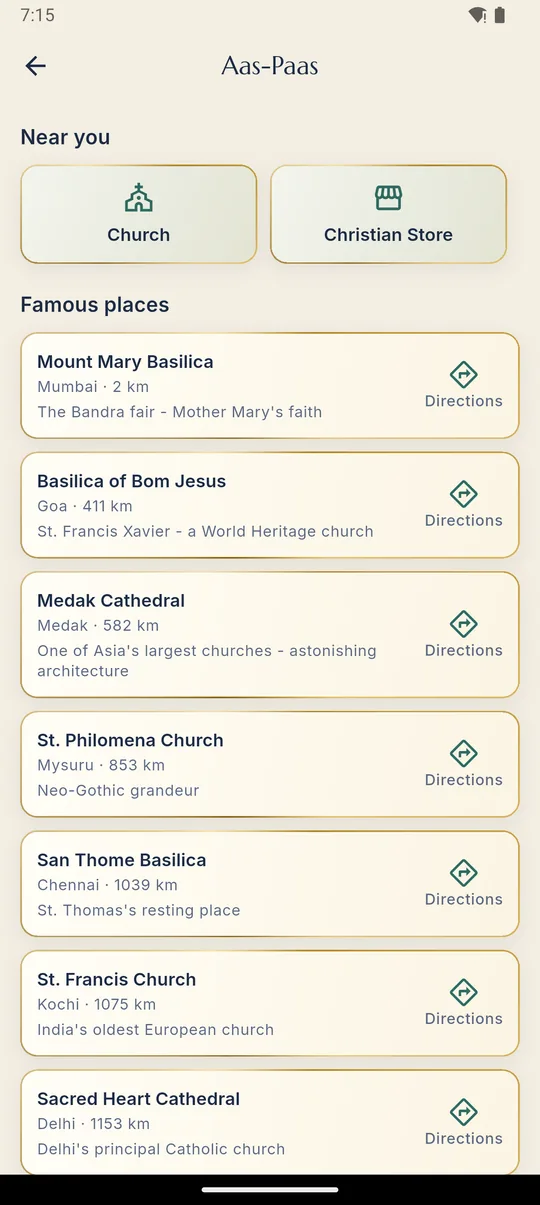
Denomination decides which feasts appear at all, and the app states it plainly: the Assumption and All Souls' Day are shown only to Roman Catholic profiles, the four-Sunday Advent only to Western ones, the Julian Nativity only to Orthodox ones. All Saints is deliberately left unscoped, because it is kept in all three streams and narrowing it would be a decision with no source behind it.
The Julian conversion throws an error rather than extrapolate if it is handed a year outside the range it was calibrated for.
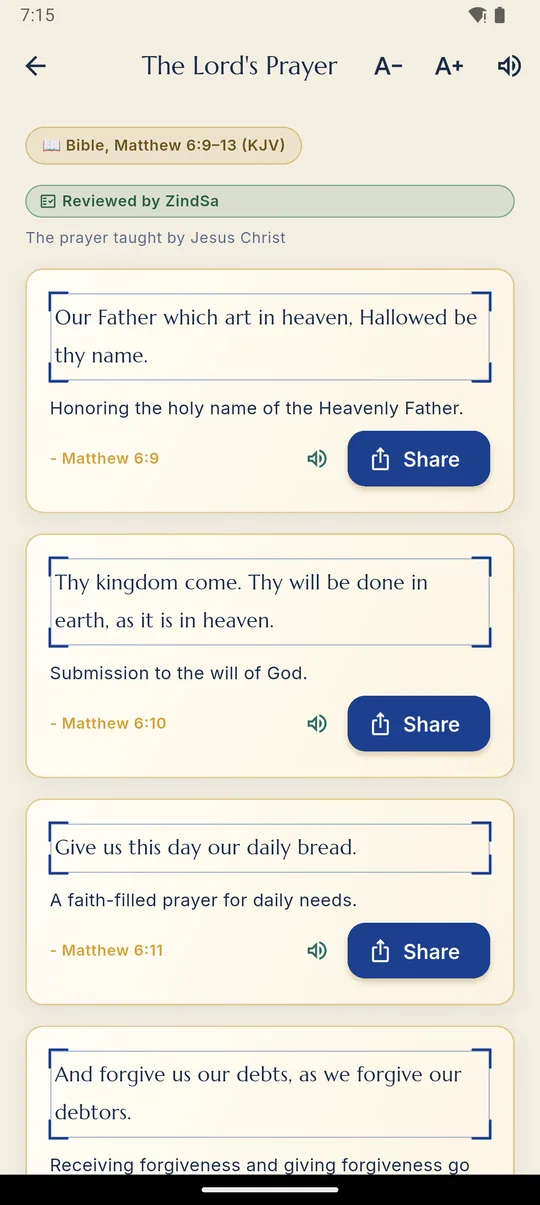
The seven Christian passages are quoted in translation, not in the original Hebrew or Greek: the King James Version in English, the Indian Revised Version in seven Indian languages, and the Van Dyck translation in Arabic. Urdu has no wording of its own yet, so an Urdu reader sees the King James English. The Life Guidance module keeps no Bible wording of its own: it gives the reference and points you to the passage.
ZindSa checks its own content against published editions, and the source, locator and date for each check are recorded in the app itself. No external scholar and no religious body has endorsed it, and this page does not claim otherwise. What is checked here is mechanism, not authority.
Muhurat and vastu are Hindu-jyotish systems. They are shown to whoever opens them, and the app says on its own screens that it carries no equivalent from any other tradition. It does not relabel them as yours. The plain-language meanings printed beside the verses, in every dharma, have authorship the licence register has not yet established, and that row is open rather than quietly closed.
Related: how ZindSa knows when Easter is, and what ZindSa does not do for your dharma. All questions.